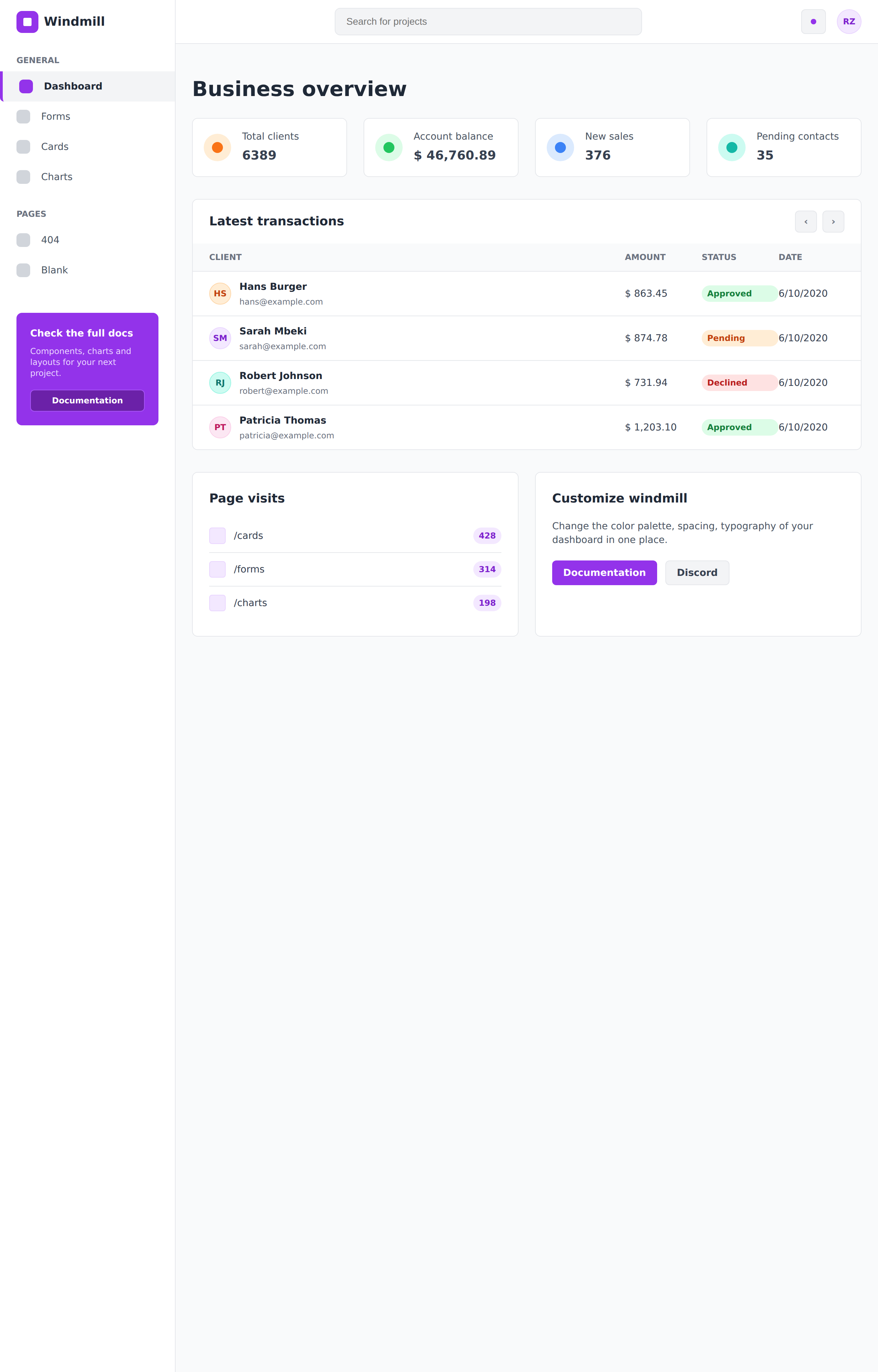
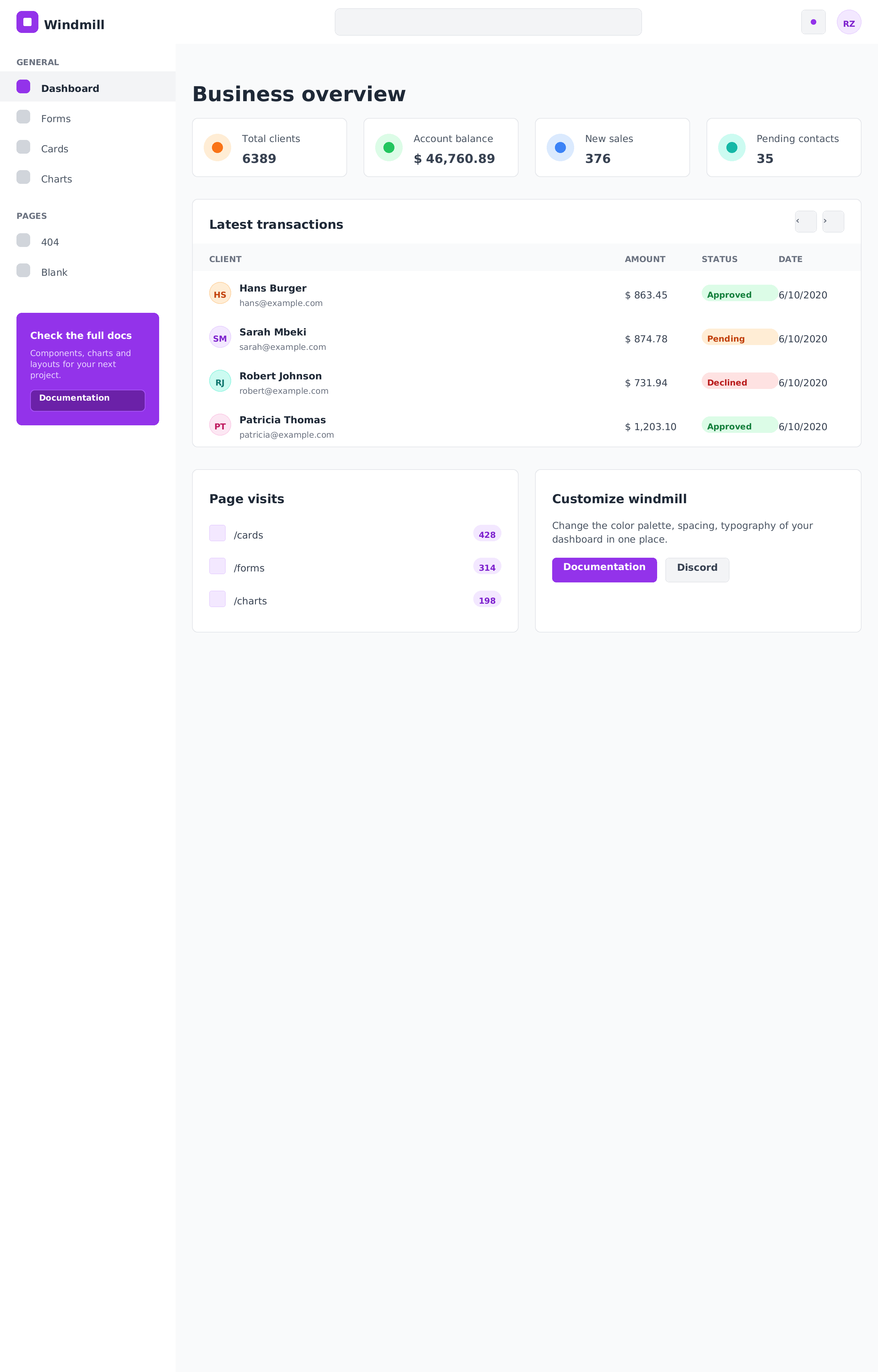
Drag every comparison yourself.
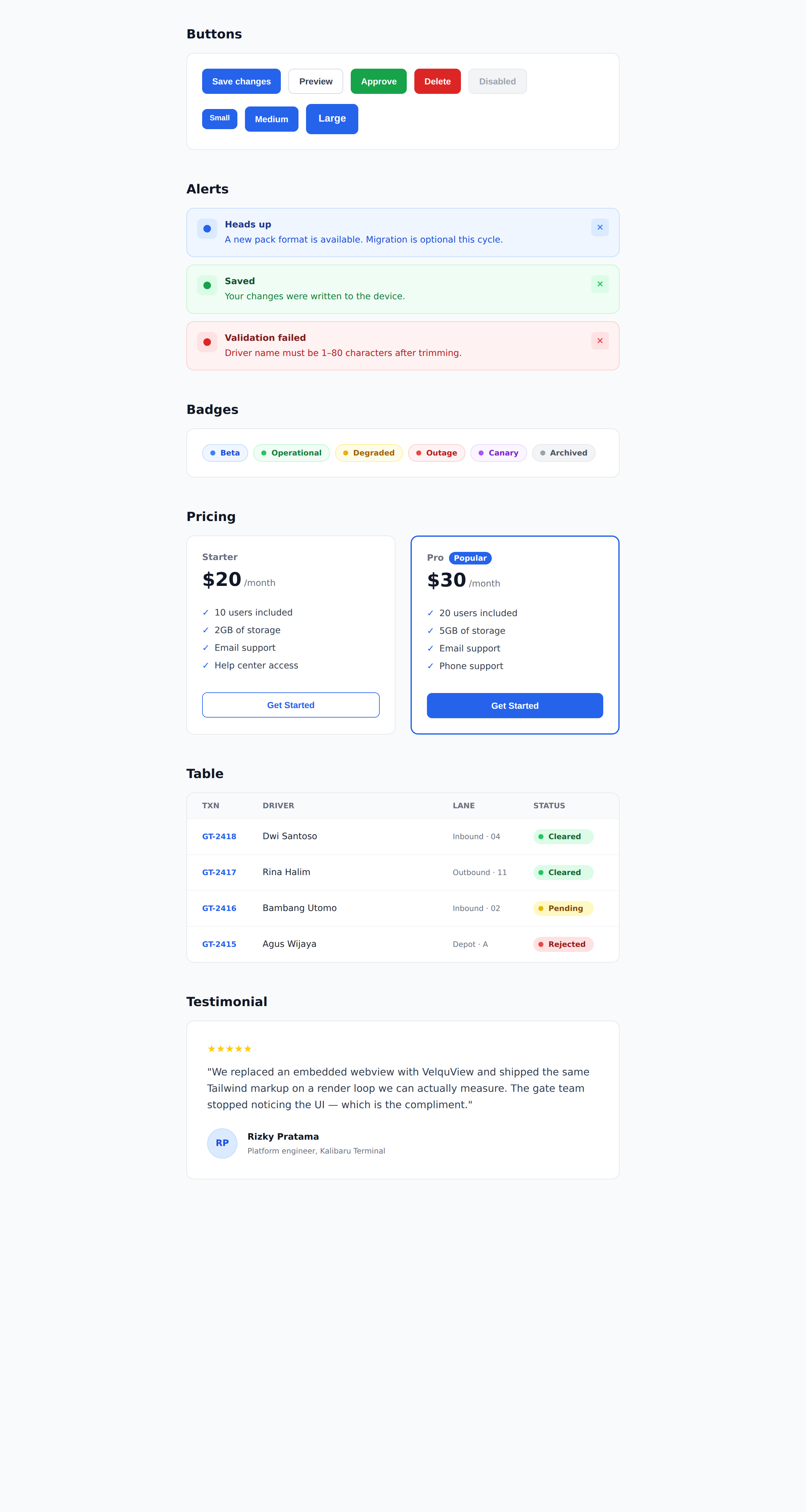
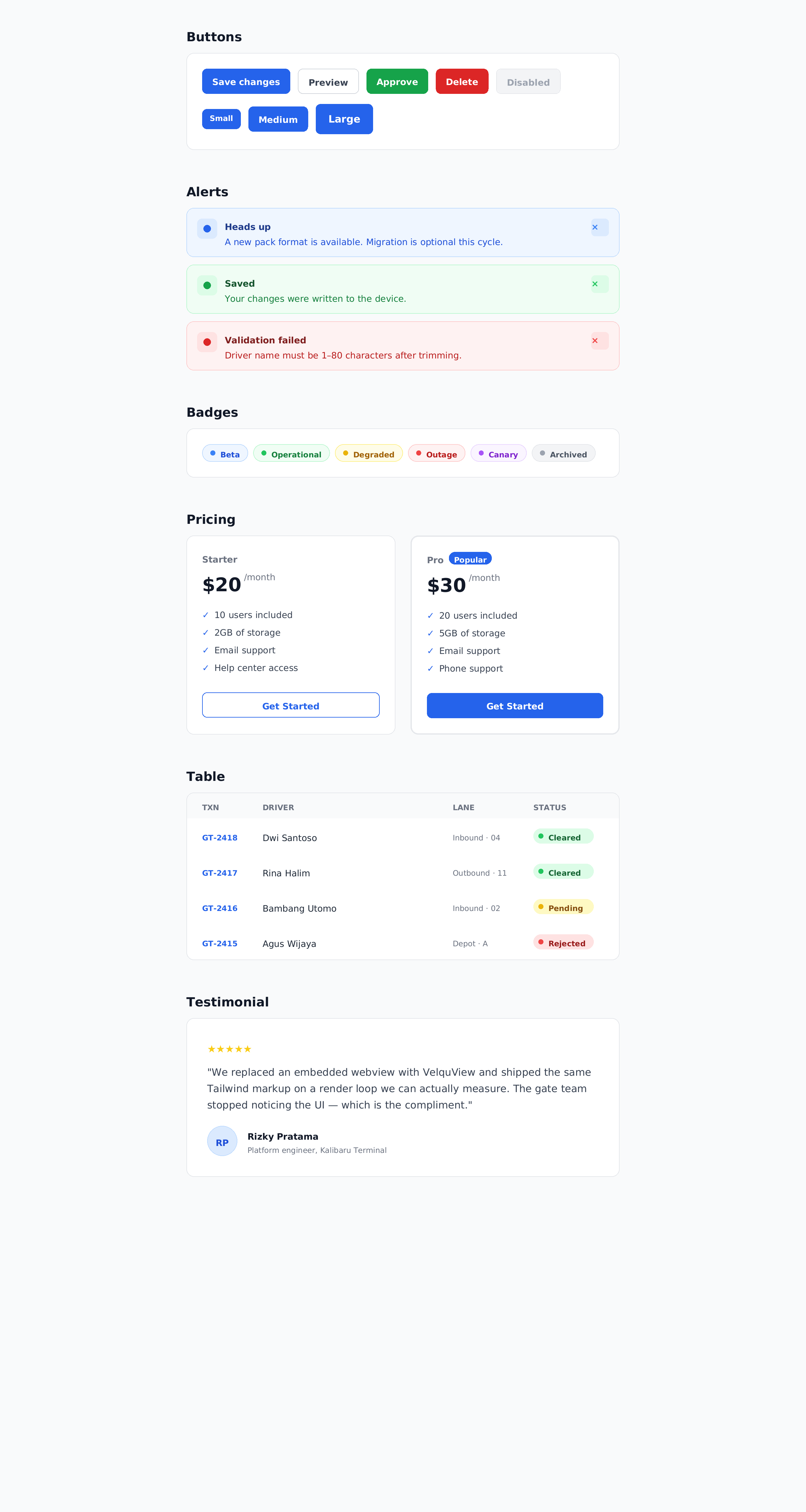
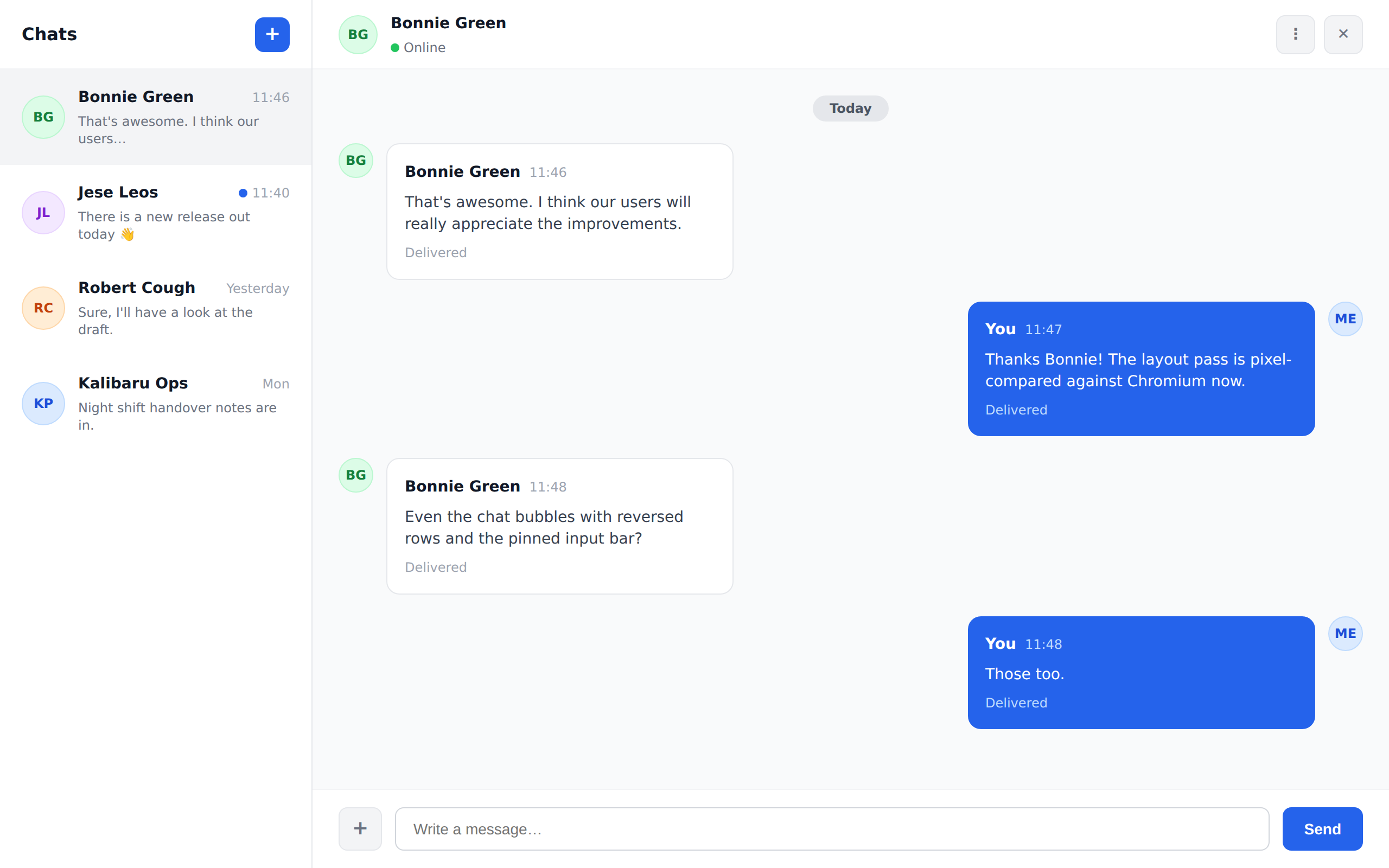
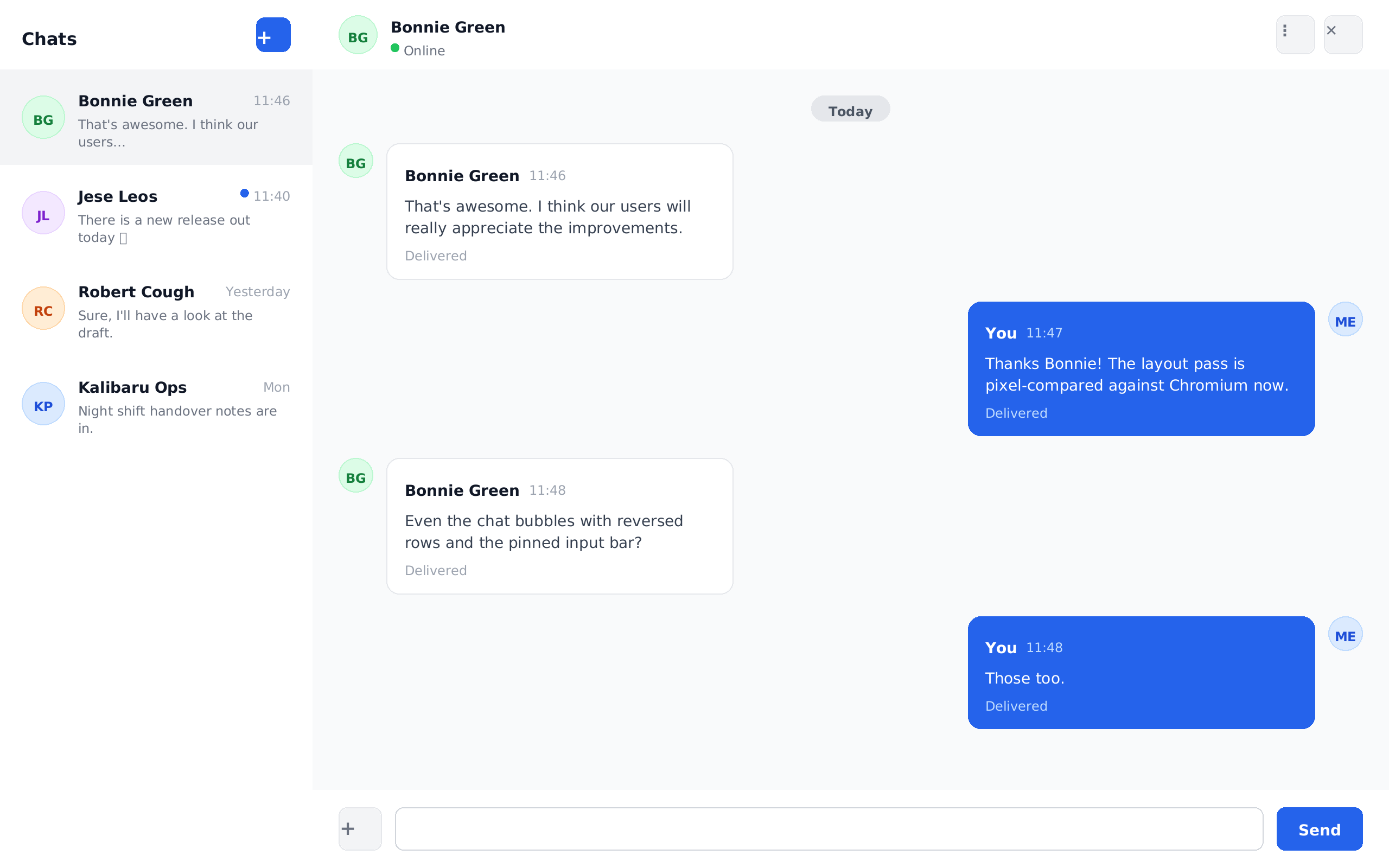
Each sample below is one file rendered by two engines — VelquView's native Tailwind v0 on the right, Chromium with real compiled Tailwind v3.4 on the left. Both sides rasterized at identical 2× pixel density; tall pages show their top region here, full renders on GitHub. Keyboard: focus a slider and use ← → Home End.
E-commerce product page
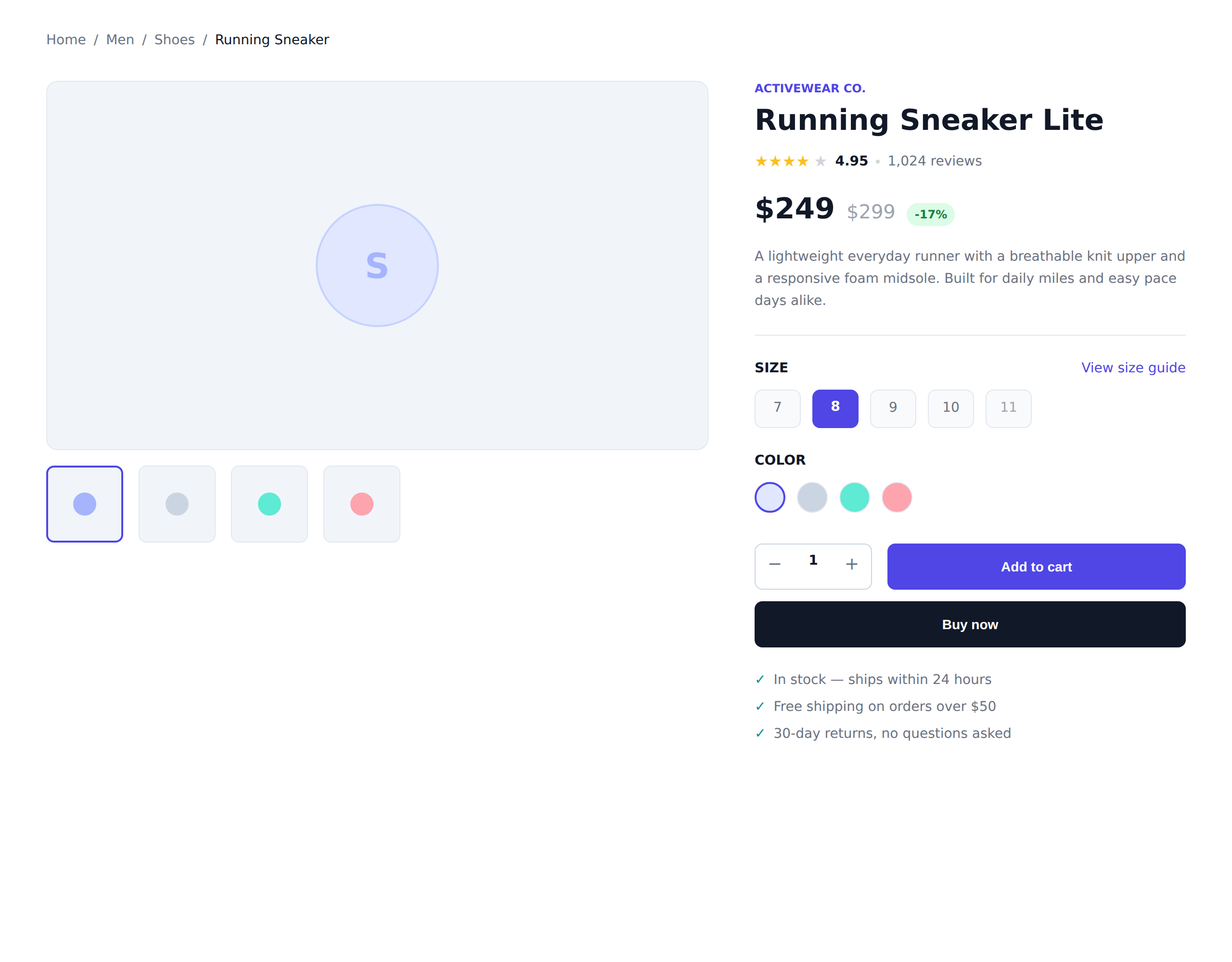
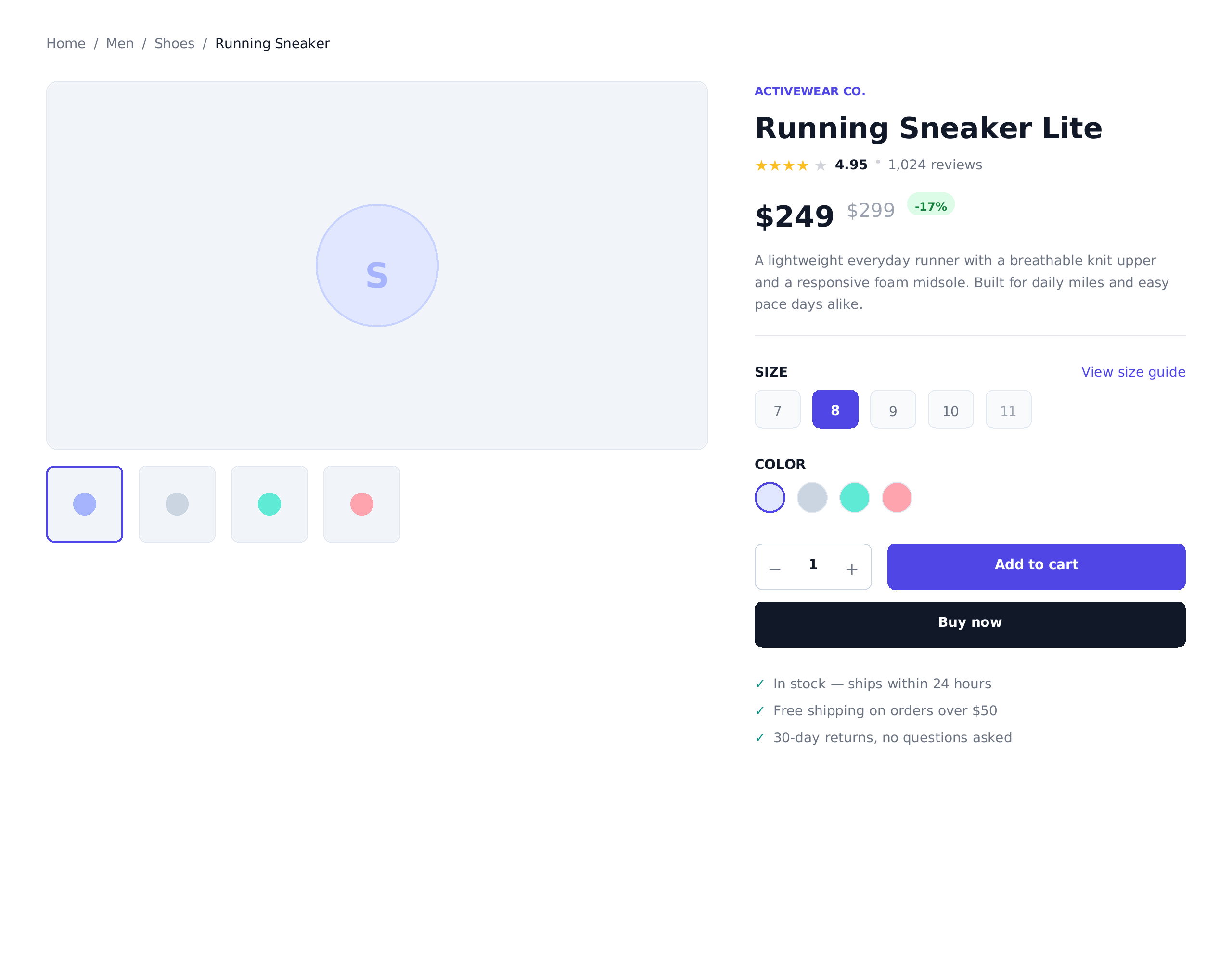
The 768px gallery block lands at identical coordinates; text rows stay within 5px logical. Full side-by-side on GitHub →
Settings
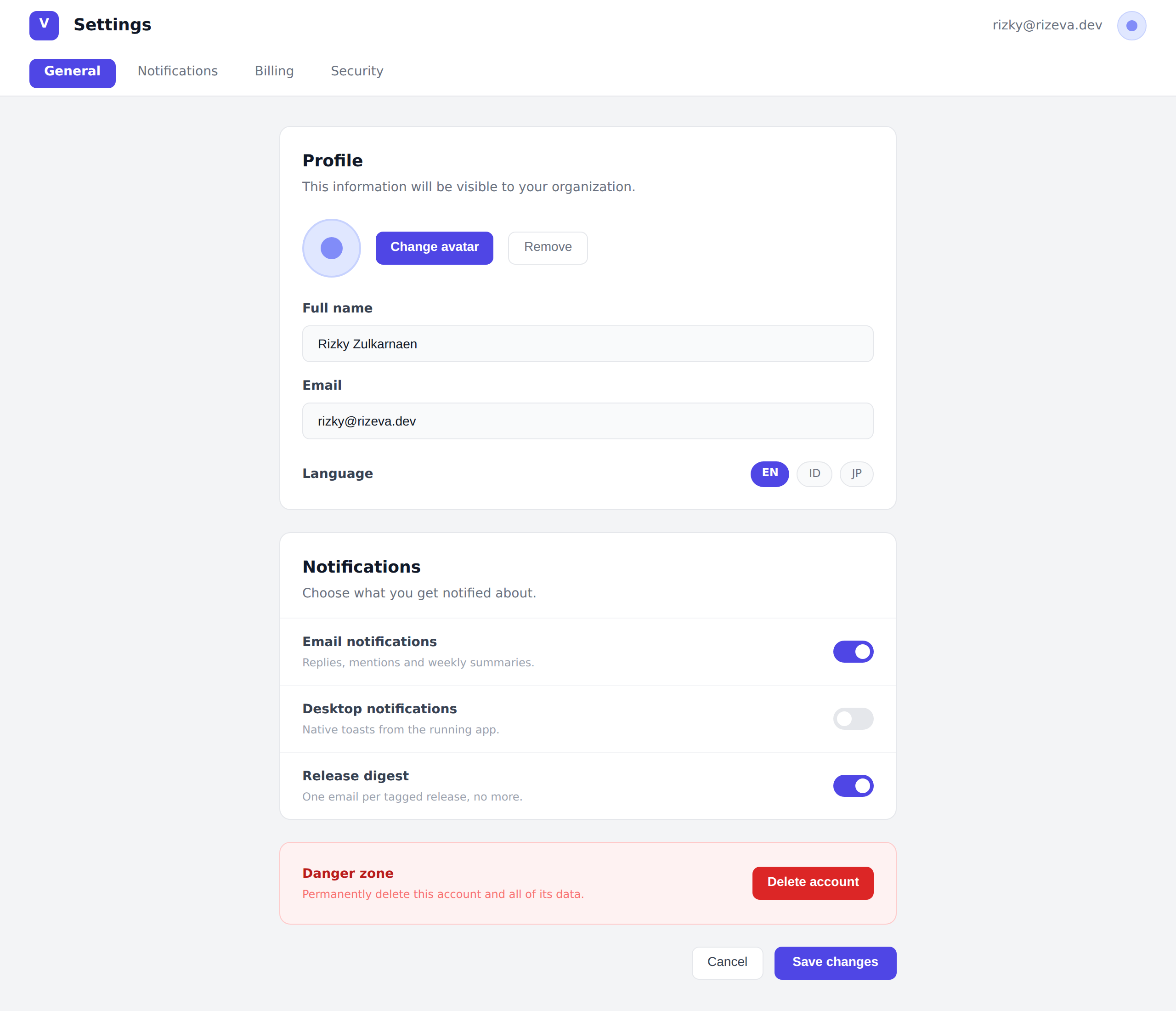
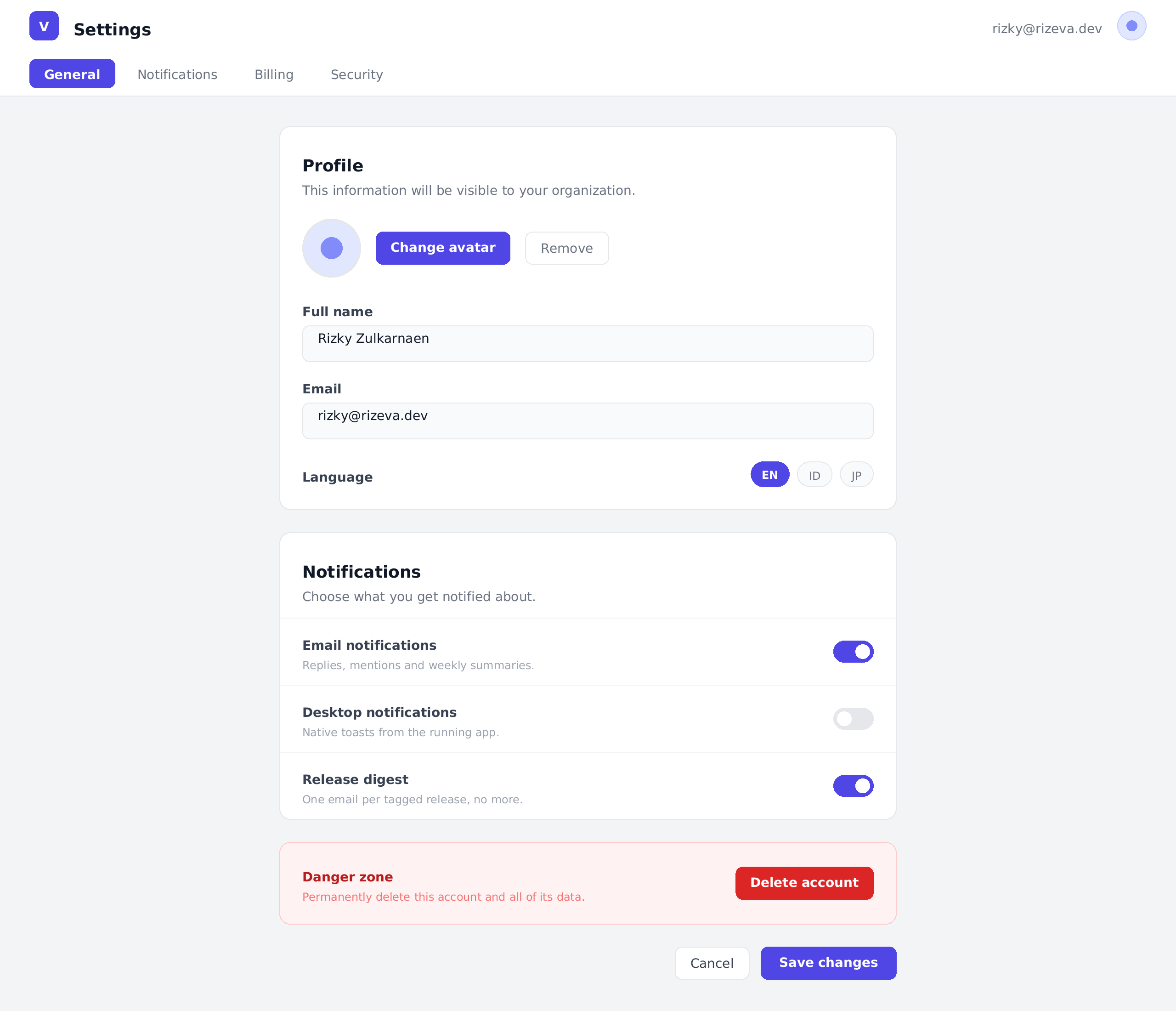
Every solid element lands at identical coordinates — tab pills, inputs, toggle tracks and knobs, danger zone; only auto-width buttons differ by their text metrics. Full side-by-side on GitHub →
Email inbox
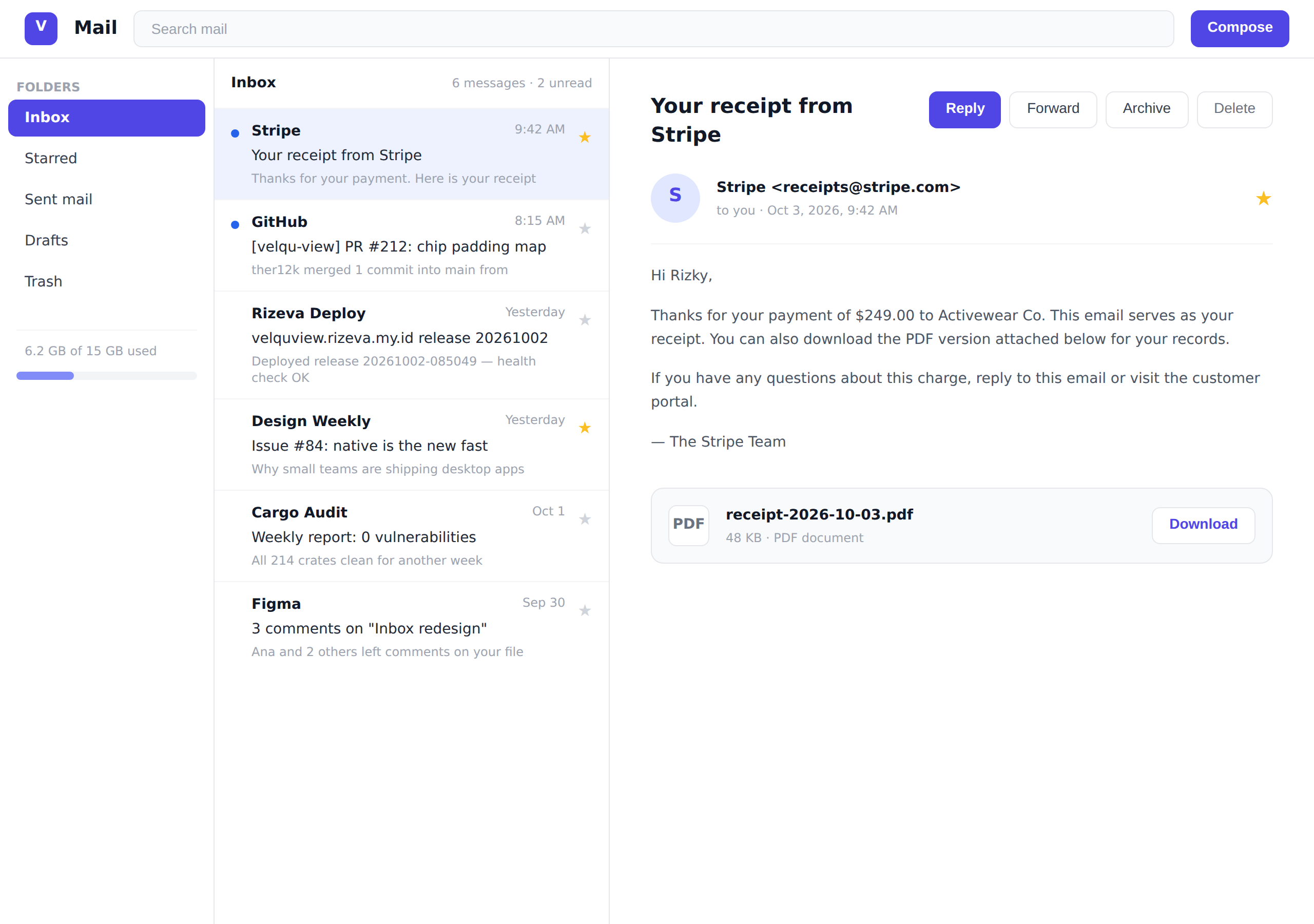
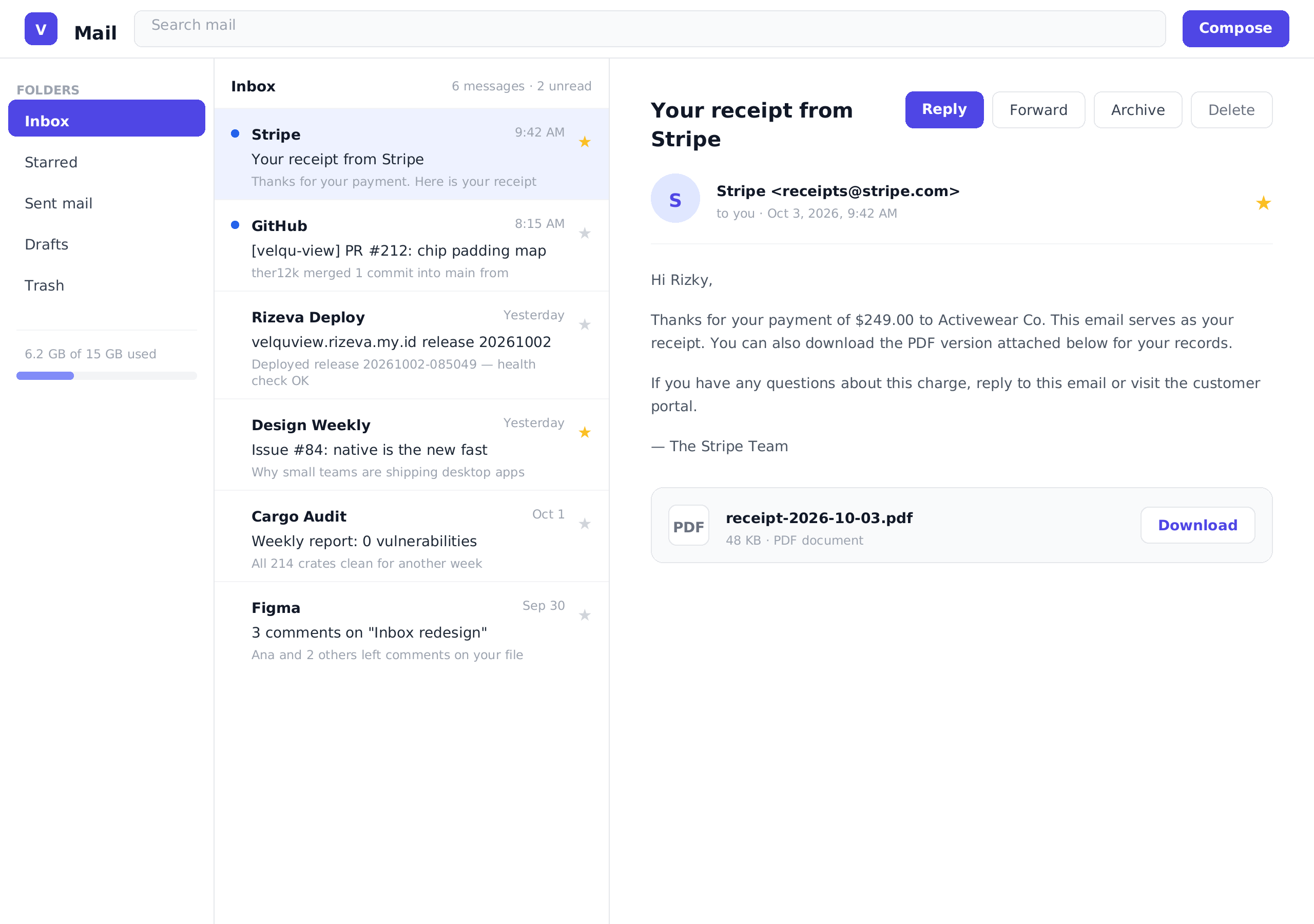
Selected row, unread dots, every list divider and the storage bar land at identical coordinates — remaining deltas are text metrics alone. Full side-by-side on GitHub →